How to Find LinkedIn Creators for B2B Campaigns: 3 Sourcing Paths + What to Avoid
A practical guide for B2B brands to shortlist the right LinkedIn creators fast, without guessing or chasing follower counts.
Co-founder @anchors ; Disrupting a $23 billion Industry | NIFT New Delhi
TLDR
- B2B LinkedIn creators should be chosen for relevance and audience fit, not follower count.
- Use three sourcing paths: creator libraries, competitor mining, and community referrals.
- Score creators on relevance, audience fit, proof, and consistency.
- Avoid fake engagement and screenshot-based reporting.
This guide is written for B2B brands running LinkedIn campaigns to reach founders, working professionals, and decision-makers. If you are searching for “how to find LinkedIn creators” and feel overwhelmed by random lists or inflated follower counts, this article will help you build a relevant, trustworthy, and conversion-ready creator shortlist.
The reality is simple: good B2B LinkedIn creators are not defined by vanity metrics. They are defined by audience fit, credibility, and consistency. Below, we break down what “good” actually looks like, three proven sourcing paths, a clear scoring rubric, and the red flags you must avoid.
What “Good” LinkedIn Creators Look Like for B2B (Not Just Followers)
In B2B, the goal is not reached alone. It is relevance to a specific professional audience. A creator with fewer followers but the right audience often outperforms a large, generic account.
Typical LinkedIn creator tiers for B2B campaigns:
- Nano creators (~1,000–10,000 followers): Highly niche, strong trust, great for targeted experiments.
- Micro creators (~10,000–50,000 followers): Balanced reach and credibility, ideal for performance-led campaigns.
- Macro creators (50,000+ followers): Broad awareness, useful when brand trust already exists.
Examples of relevant creator types (illustrative):
- HR leadership creator (~8k followers)
- B2B SaaS operator sharing growth lessons (~22k followers)
- Startup finance educator (~15k followers)
Notice that none of these examples rely on celebrity status. They rely on contextual authority.
Path 1: Manual Discovery Through Native LinkedIn Search
Best for: Teams sourcing their first five to ten creators, early pilots, and niche categories where the creator pool is small enough to evaluate manually.
Time investment: High. Plan for two to three hours of focused search to produce a vetted shortlist of ten creators.
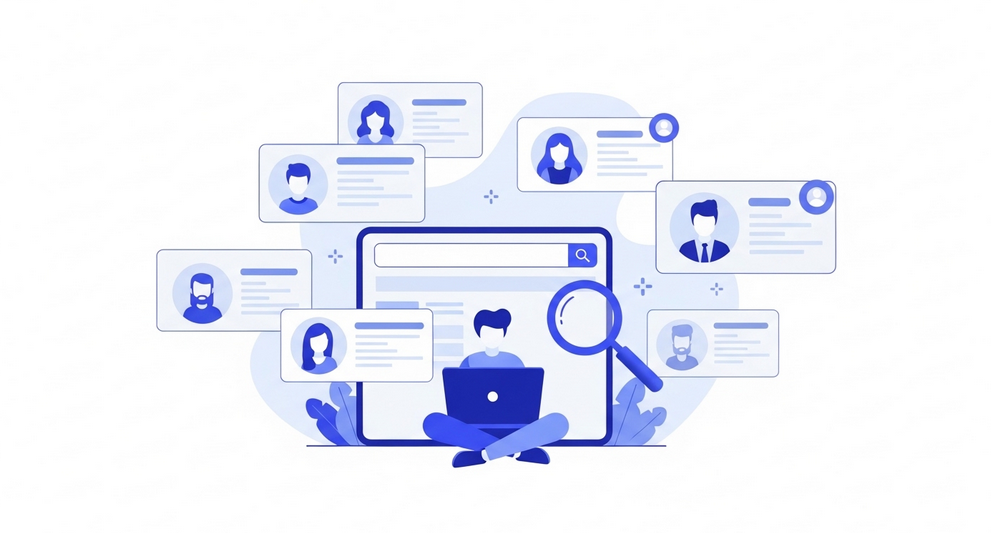
Manual discovery through LinkedIn's own search is the most accessible starting point and, when done correctly, produces higher-quality initial candidates than most tools — because it forces you to read actual content rather than rely on surface metrics.
How to Do It
Start with Boolean search operators. LinkedIn's search bar accepts Boolean logic. Use it to combine role and topic signals rather than searching broad categories. Examples for a B2B HR SaaS brand:
- "HR" AND "SaaS" AND "hiring" to find people who write at the intersection of HR and technology
What Manual Discovery Misses
The fundamental limitation of manual search is that you can evaluate a creator's content and profile easily, but you cannot easily evaluate their audience. You can see that someone posts about HR technology consistently. You cannot tell from their profile alone whether their 12,000 followers are mostly HR leaders or mostly job seekers and recruiters. That distinction is consequential for a B2B campaign.
For manual discovery, the workaround is qualitative: look at who comments. If the comment section of their posts includes job titles that match your ICP, VPs of People, HR Directors, People Ops Managers then that is a strong signal. If comments are generic or from clearly mismatched audiences, move on regardless of engagement numbers.
Platforms like anchors help brands access LinkedIn-first creators and run performance-based campaigns using verified LinkedIn data, removing the need for manual outreach or screenshot-based reporting.
Use case: Shortlisting 10–15 relevant creators in minutes instead of days.
Path 2: Third-Party Discovery Tools
Best for: Teams sourcing ten or more creators, scaling an existing program, or running campaigns across multiple verticals simultaneously.
Time investment: Lower per creator than manual, but requires budget and a calibration period to interpret results correctly for LinkedIn.
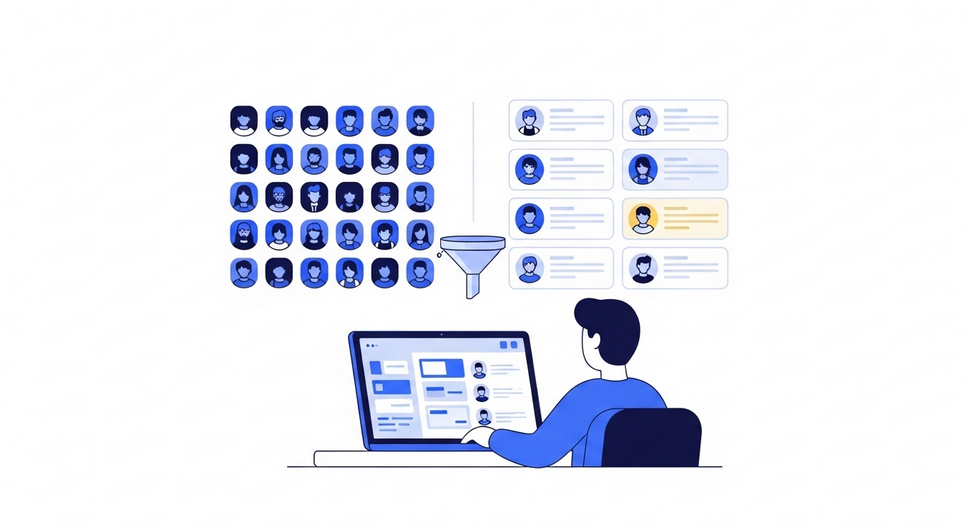
Platforms like Favikon, Modash, anchors and similar tools can dramatically speed up LinkedIn creator discovery by giving you searchable databases, engagement data, and historical post performance across large creator sets. Used correctly, they are genuinely useful. Used incorrectly, they produce lists of creators who look strong by the wrong metrics.
What These Tools Do Well on LinkedIn
They surface creators you would never find through manual search, particularly in adjacent niches. They let you apply filters at scale, niche category, follower range, posting frequency, engagement rate, to narrow a large pool quickly. They track historical engagement trends, which helps you identify creators on a growth trajectory versus ones who peaked and are declining.
Path 3: Network and Community-Led Discovery
Best for: Teams who want higher confidence in creator quality before outreach, brands with established customer communities, and anyone who has burned budget on misaligned creators and wants a more reliable sourcing method.
Time investment: Lowest per quality creator, but requires existing relationships or community presence to tap.
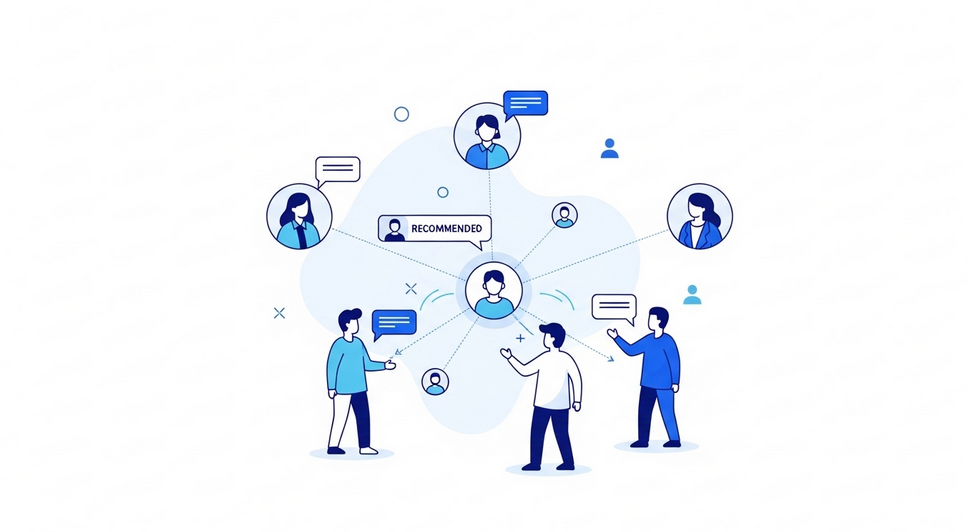
This is the most underused sourcing path in B2B LinkedIn creator programs and consistently produces the highest-confidence candidates. The core principle: find creators who are already credible within the communities your buyers inhabit, rather than finding creators first and hoping their audience overlaps with your buyers.
The Scoring Rubric: How to Evaluate Creators Objectively
Breakdown by Criteria
Relevance
- Focus: Topic and pain-point alignment.
- Key Question: Do they talk about the same problems your product solves?
Audience Fit
- Focus: Demographic and professional overlap.
- Key Question: Are their followers similar to your Ideal Customer Profile (ICP)?
Proof
- Focus: Content depth and established credibility.
- Key Question: Do they share real experiences, frameworks, or case-style insights?
Consistency
- Focus: Reliability and community health.
- Key Question: Are they posting regularly with stable engagement?
The Bottom Line: Creators who score well across all four of these criteria are far more likely to drive tangible outcomes, such as qualified leads and signups. Using this system prevents bias and keeps your entire team aligned on what a "good" partner looks like.
Red Flags and Fake Signals (What to Avoid)
Many LinkedIn creators look impressive on the surface but fail in B2B campaigns. Watch out for these red flags:
- Engagement pods with generic comments
- Sudden follower spikes with low relevance
- Content that is motivational but not actionable
- No clear audience focus (posting about everything)
- Unwillingness to align on performance tracking
If a creator cannot clearly explain who their audience is, they are risky for performance campaigns.
Generate Your Shortlist with Cleo (In 3 Minutes)
Instead of juggling spreadsheets and manual checks, some brands now use creator discovery tools where you:
- Input your domain or competitor domain
- Select your target audience
- Get a ranked creator shortlist instantly
This reduces sourcing time dramatically and lets marketing teams focus on briefing, messaging, and optimization. When combined with platforms like anchors, brands can go from discovery to live LinkedIn campaigns with far less friction.
Mistakes We’ve Seen B2B Brands Make
- Choosing creators based only on followers
- Running one-off posts with no learning loop
- Ignoring audience overlap checks
- Measuring success via screenshots
- Treating influencer marketing as branding only
B2B influencer marketing works best when treated like ads: structured, trackable, and iterative.
FAQs
How many LinkedIn creators should a B2B brand start with?
Start small with 5–10 creators. This gives enough data to learn without spreading budget too thin.
Are nano creators worth it for B2B?
Yes, especially for niche audiences. Nano creators often have higher trust and relevance.
How do you track performance on LinkedIn creator campaigns?
Use platforms that rely on verified LinkedIn data instead of screenshots to track impressions, clicks, and conversions.
Should creators post from their personal profile or company page?
Personal profiles usually perform better because LinkedIn prioritizes people over brands.
Explore More Articles
Discover our latest insights on SEO, content marketing, and digital strategy. Explore our curated collection of articles to enhance your digital presence.
← Scroll to explore more →