
Building AI Agents | Generative AI | Data Science | Artificial Intelligence | NLP | GPT | Agentic AI | RAG | Making AI accessible | Love to Code and Write
✨
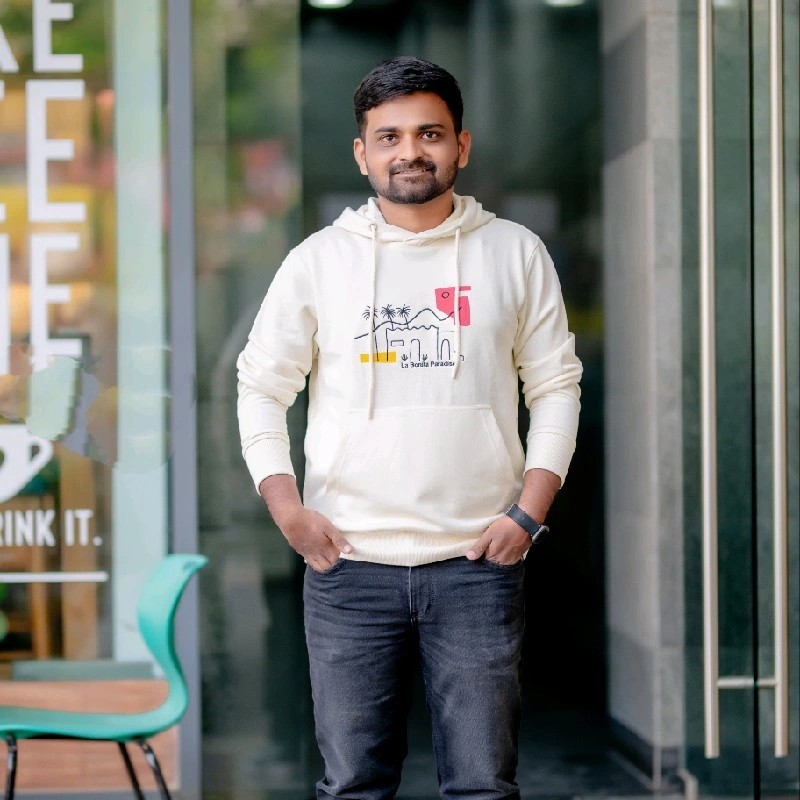
Rajesh Mane is a LinkedIn creator based in Pune/Pimpri-Chinchwad Area with 15,488 followers, focused on Tech Trends, Innovation, and Upskilling content. Posts average 80 likes and 0.7% engagement.
🤝
7% of my posts go viral. Yours could be next
Ready to collaborate?Let's give your brand a boost with some creative ways & authentic marketing!
dummy@mail.com
+91 9999999999
🔒
🫱🏼🫲🏽
Profile Highlights
A quick glance at some key stats
15,488Total Followers
80Avg Likes
24Avg Comments
0.7%Avg Eng.
1Past Collabs
💭
Engagement Over Time
Visualization of how my engagement on posts has evolved
LatestOldest
📆
My Activity & Engagement Calendar
Visualizing posting frequency and audience engagement over the last 6 months
Influencer Activity & Engagement Calendar
Visualizing posting frequency and audience engagement over the last 6 months
Engagement:
Low
Below Avg
Above Avg
High
December 2025
M
T
W
T
F
S
S
January 2026
M
T
W
T
F
S
S
February 2026
M
T
W
T
F
S
S
March 2026
M
T
W
T
F
S
S
April 2026
M
T
W
T
F
S
S
May 2026
M
T
W
T
F
S
S
Dec 2025
Jan 2026
Feb 2026
Mar 2026
Apr 2026
May 2026
M
T
W
T
F
S
S
M
T
W
T
F
S
S
M
T
W
T
F
S
S
M
T
W
T
F
S
S
M
T
W
T
F
S
S
M
T
W
T
F
S
S
Hover over cells to see post details and engagement metricsTap cells for details
Total posts: 0
Engagement Levels:
Low
Below Avg
Above Avg
High
💭
Most Engaged Posts
My Top 3 posts with the highest engagement
Rajesh ManeBuilding AI Agents | Generative AI | Data Science | Artificial Intelligence | NLP | GPT | Agentic AI | RAG | Making AI accessible | Love to Code and Write
This one Machine Learning playbook is enough to build strong ML foundations.
If you want to truly understand machine learning, this resource is worth your time. It focuses on how ML actually works at the data and code level, which is where most gaps begin.
What I liked is the emphasis on fundamentals before algorithms. You learn how data is created, loaded, cleaned, transformed, and prepared long before any model is trained. That context makes everything else make sense.
It walks through:
• NumPy and the math behind ML operations
• Loading data from real sources like CSVs, JSON, SQL databases, cloud storage
• Cleaning messy, real-world datasets
• Handling missing values and outliers properly
• Feature scaling and transformations
• Preparing data for regression, classification, and clustering
This is the kind of foundation that saves months of confusion later, especially when models don’t behave as expected.
If you are serious about ML, start here before chasing advanced architectures.
#machinelearning #datascience #python #MLFoundations #analytics #ai
Rajesh ManeBuilding AI Agents | Generative AI | Data Science | Artificial Intelligence | NLP | GPT | Agentic AI | RAG | Making AI accessible | Love to Code and Write
Data Science interviews rarely test whether you know definitions.
They test whether you can reason under incomplete information.
This collection is a reminder of the kind of questions that actually decide interviews.
Here are the some of the questions it includes:
• How would you explain the bias variance tradeoff to a non-technical stakeholder using a real business example
• A model performs well offline but fails after deployment. Where do you start debugging
• How do you detect data leakage if you are not told it exists
• Given two models with similar accuracy, how do you decide which one to ship
• How would you design an experiment when you cannot randomize users
• Why can accuracy be a misleading metric and what would you use instead
• What changes when your dataset grows 10x but your compute budget stays fixed
• How do you explain a wrong prediction to a product manager
This kind of preparation forces you to connect statistics, modeling choices, evaluation, and real world constraints instead of treating them as separate topics.
#datascience #machinelearning #interviewprep #analytics #careers
Rajesh ManeBuilding AI Agents | Generative AI | Data Science | Artificial Intelligence | NLP | GPT | Agentic AI | RAG | Making AI accessible | Love to Code and Write
GenAI interviews are evolving fast.
If you want to stay ahead of the curve, it’s no longer enough to explain what transformers or RAG are.
The real test is whether you can design, scale, and safeguard GenAI in production.
Here are 10 most important questions that are being asked 👇
1. Your chatbot starts generating biased and toxic responses at scale. You don’t have time to retrain. How would you detect, measure, and patch it within 48 hours?
2. You need to build a doc Q&A system for 5 million PDFs, but Pinecone/Weaviate costs blow your budget. What’s your alternative architecture?
3. A fine-tuned legal summarizer repeatedly omits disclaimers. If lawyers reject it, your product dies. How do you redesign training and prompts to guarantee compliance?
4. The client demands on-prem deployment of a 7B LLM, but they only have 2×24GB GPUs. How do you deliver without downgrading performance?
5. Your GenAI API bills cross $500K/month after 100K DAUs. Leadership wants costs down by 70% without quality loss. What’s your action plan?
6. You’re tasked with a medical note summarizer. Regulators will audit outputs line by line. How do you ensure accuracy, compliance, and trust?
7. Product wants 1M token context windows running on edge devices. Latency must stay under 500ms. How do you make it feasible?
8. Marketing demands personalized product copy in 15 languages with brand tone intact. The base model is only strong in English. How do you scale this globally?
9. Your RAG system still hallucinates, even with high retrieval recall. Users are losing trust. How do you debug and permanently reduce hallucinations?
10. You’re building a “Chat with Codebase” tool, but the security team fears prompt injection and malicious code execution. How do you design airtight guardrails?
👉 These are the kinds of questions that separate people who know GenAI concepts from those who can build real systems that last.
In my upcoming posts, I’ll share expert level answers you can actually apply. Stay tuned 🔔
💡 Which one do you think can answer comfortably? (Drop your pick 👇)